A 0% label describes interest. It does not establish whether every repayment fits alongside essentials.
 Watch the original Finance Hub video
The complete affordability test
Put all repayments on the same calendar as income, rent, utilities and other essentials. Several manageable-looking payments can land before the next salary.
The original illustration
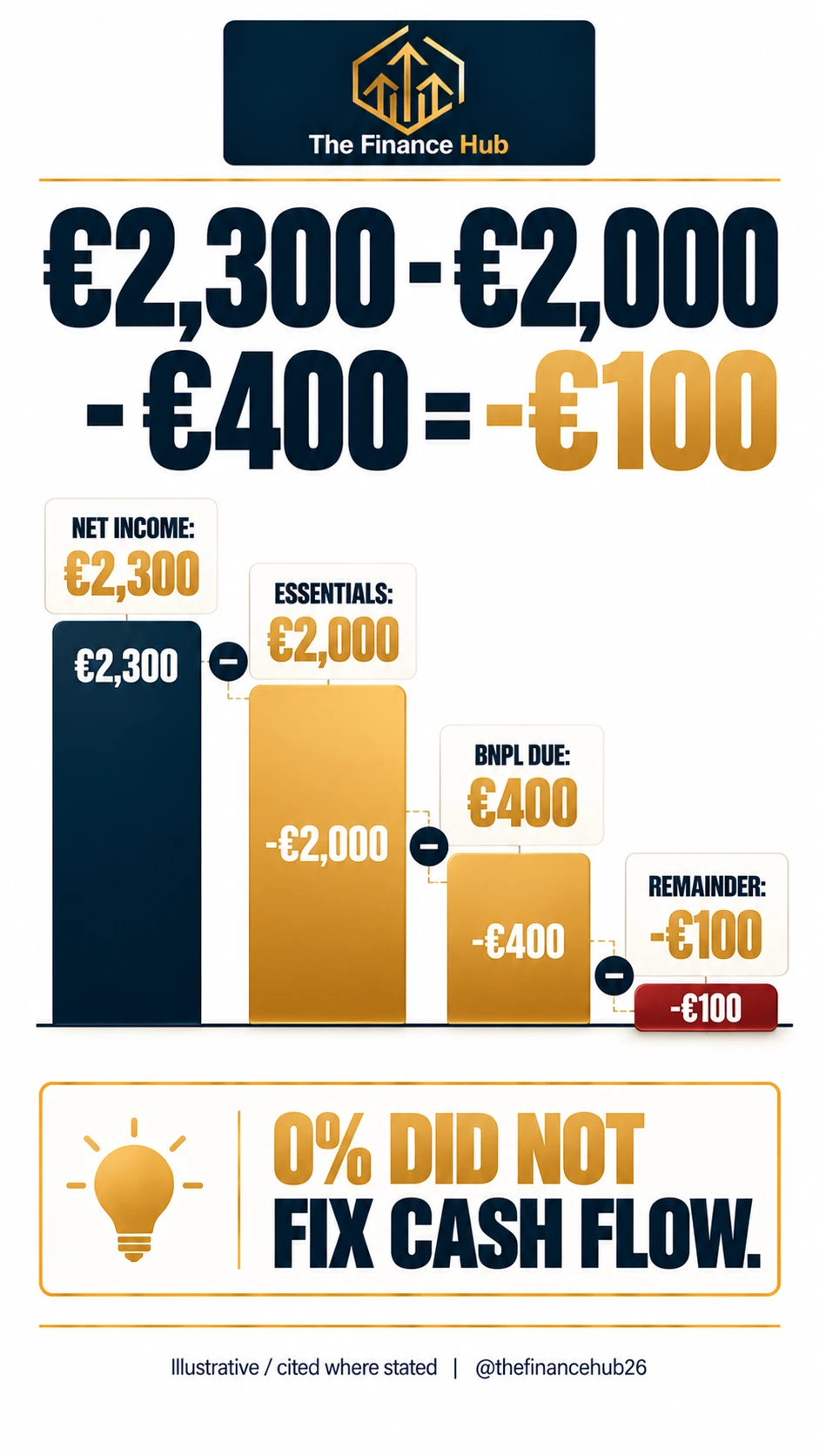
The visual uses €2,300 net income, €2,000 essentials and €400 of BNPL payments. €2,300 − €2,000 − €400 = −€100. With no interest charged in this illustration, the household still has a €100 shortfall.
Keep obligations separate from costs
A repayment is not automatically a fee. Record the purchase balance, scheduled principal repayments, any interest and late charges separately. This avoids counting the same obligation twice.
Use the next 30 days
List the actual due date and amount for each plan, then check the lowest cash balance before your next income arrives. Avoid assuming a refund has cleared until it is confirmed.